
Tim Hack · Founder, Vaapad Capital
Documents his own book, decisions, and lessons in public. · 02. Sept. 26 About the founder
The End of the United States
The world pays America protection money – in Treasuries, for soldiers. The dollar holds because the gold is paper. Now Russia and Iran are testing the soldiers, and China is tearing up the paper.
There is a sentence one should have heard in 2014. Xu Luode, then chairman of the Shanghai Gold Exchange, said it before the assembled London bullion industry: Shanghai would end the arrangement under which gold is consumed in the East but priced in the West – and once China had a voice in the international gold market, the true price of gold would become visible.
The true price. Not the higher one, not the fair one – the true one. With that, the chairman of a state-owned exchange is saying in public that the prevailing price is not true. Nobody listened, because nobody wanted to. Twelve years on, the sentence is no longer a quotation. It is a timetable, and China is working through it.
The system that is to be broken
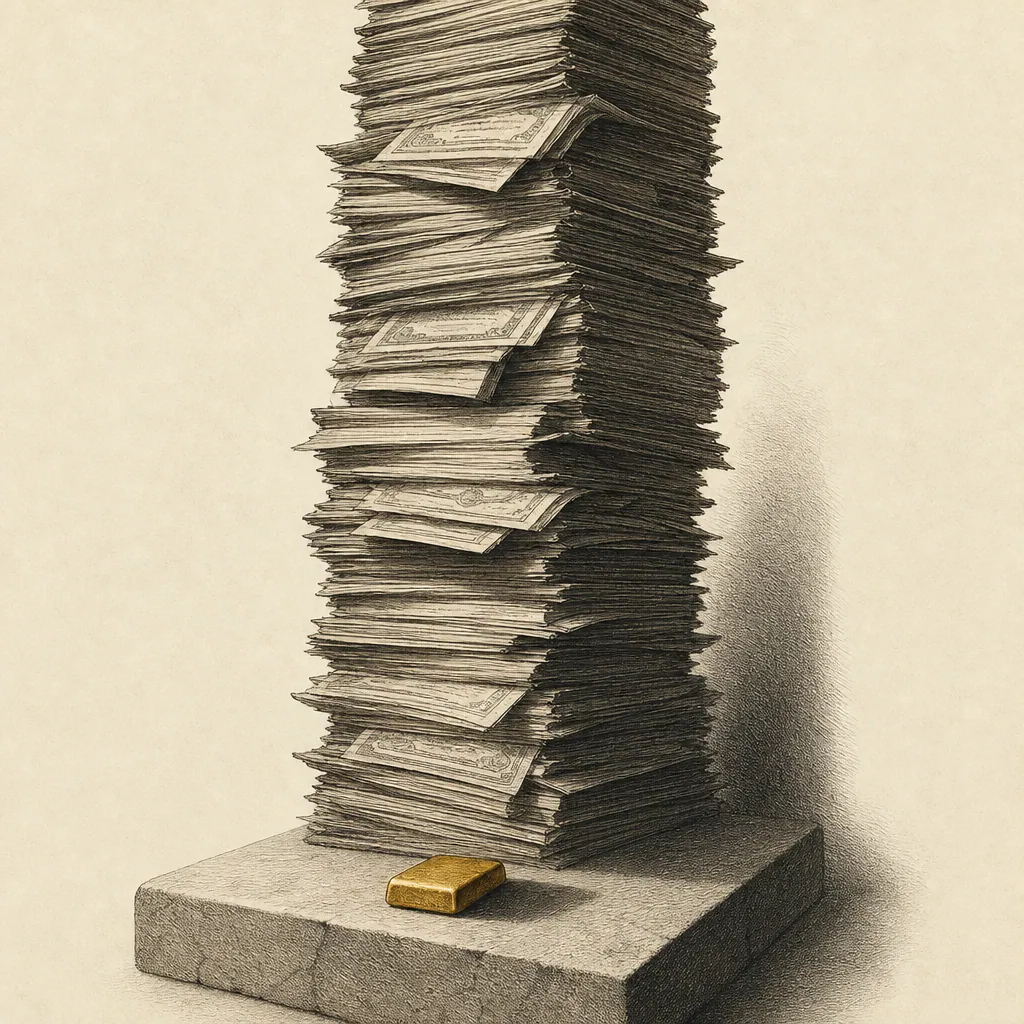
The Western gold price is not made in vaults. It is made on COMEX and in the London OTC market, where a multiple of annual mine production changes hands in contracts every day without a single ounce being moved. For every ounce held physically there are dozens of claims in paper form. The ratio most recently stood at 133 to 1 – 133 contract claims on every ounce actually registered for delivery on COMEX. The figure moves with the reporting status of the vaults, but its order of magnitude has been the same for years, and it says the decisive thing: if one per cent of the claims demands delivery, the system is already oversubscribed. This is not market failure, it is design: as long as gold trades as a contract, its price can be set by contracts – and contracts can be created in any quantity. A seller who owns no gold can push down the price of gold. This is the leverage machine that has shielded the dollar from its own reflection since 1971.
Only one to five per cent of all gold transactions settle physically today. The rest is paper: certificates, futures, unallocated accounts, swaps. This is not a side market, this is the market – and it prices a good it never touches in more than 95 per cent of cases.
And the system is already showing cracks that can be measured. In a functioning market the price of physical gold sits some 0.2 per cent above the paper price – the cost of minting, transport, storage. Today the premium on large bars stands at 2.5 per cent, twelve times as much. On small coins at 7.5 per cent, thirty-five times as much. That premium is the price buyers pay today to be certain they hold metal and not a claim. It is the fever chart of the paper system, and it is rising.
Anyone who wants to destroy this machine does not have to take away its gold. They have to take away its leverage.
What China is doing
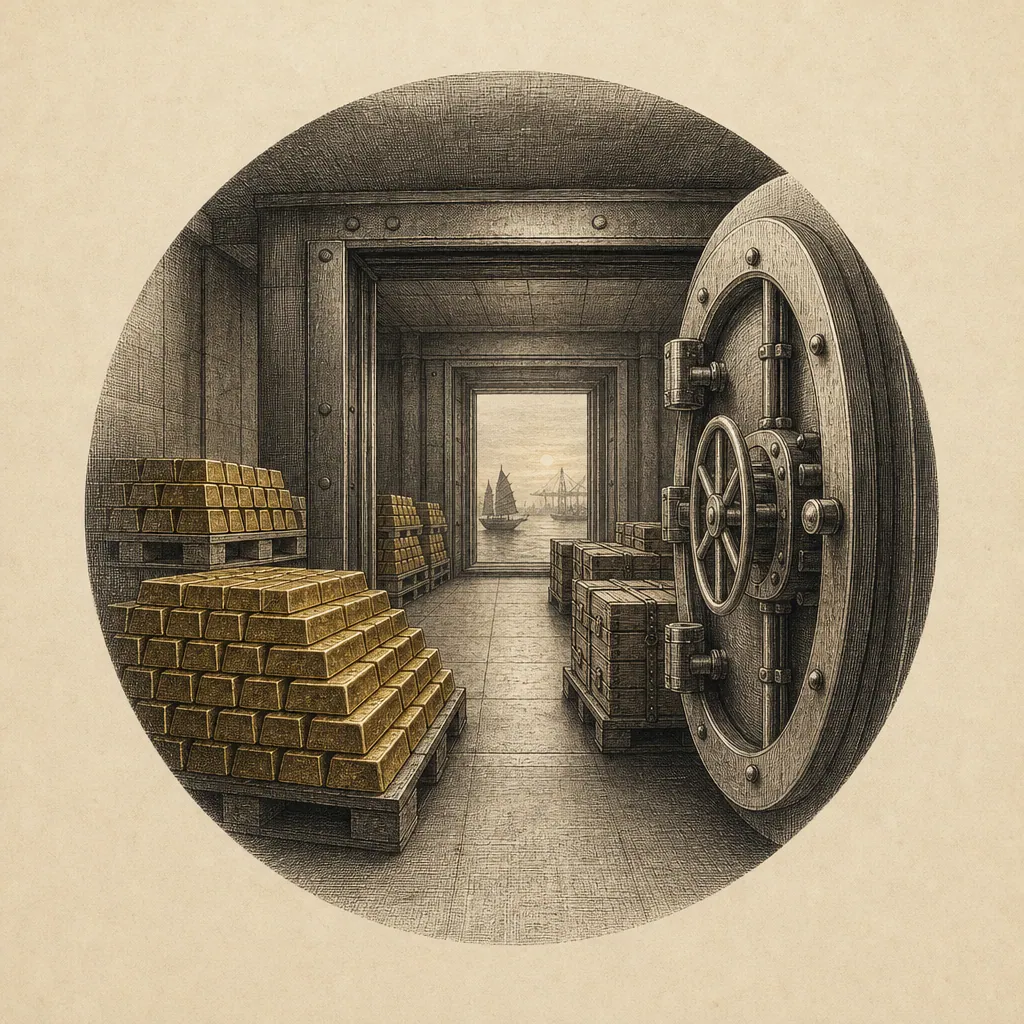
That is precisely what is happening. On 24 July 2026 the four big state banks – ICBC, Agricultural Bank of China, China Construction Bank, Bank of China – together with Postal Savings Bank, Ping An and Guangfa, discontinued their leveraged gold trading products for retail customers. Four state banks in China do not act alike on the same day by coincidence. That is an instruction, not a business decision. Millions of accounts were given three options: close, sell, or take physical delivery. Before that, the same banks had raised margin requirements to 140 per cent, a level that does not restrict leverage but abolishes it. The official justification is investor protection. That is the language in which states sell structural policy.
What actually happened on 24 July can be read off the gold price – just not on the date itself. Gold closed that Friday between $4,050 and $4,070, and the Western press noted with relief that nothing had happened. A few days later the rise began. By the end of August gold stood at around $4,400, a gain of more than eight per cent, of which 6.2 per cent came in the week to 25 August alone – and this with speculative funds holding back as buyers, according to CFTC data. The price rose without the usual paper buyers driving it. That is exactly the signature one expects when demand arrives in metal rather than in contracts: no squeeze in the futures market, but a steady pull on the vaults. The strategic game is not being announced. It is under way, and it has already changed the gold price.
The process is a deleveraging of the gold trade from the bottom up. China is cutting off the channel in which gold demand used to land as paper, and routing it into metal. Every yuan that previously bought a contract now buys an ounce or nothing at all. This is not a decline in demand. It is demand materialising.
And the retail step is the first stage, not the last. The direction has been the same for years: since 2014 the Shanghai Gold Exchange has traded on an international board in yuan, it has its own benchmark fix, it operates vaults in Hong Kong and, since 2025, in Saudi Arabia. The People's Bank of China has been buying month after month since November 2022 and reports a fraction of what flows into the country through Hong Kong. Riyadh settles oil in yuan, and so does Moscow. Every element of this architecture has the same property: it trades metal, not promises.
The numbers behind it are clearer than the official statistics admit. From 2022 to 2025 central banks bought around a thousand tonnes of physical gold a year – twice the average of the years 2010 to 2021. Physical, not in contracts. And even that is the lower bound: for the first quarter of 2026 central banks officially reported purchases of 16 tonnes; the World Gold Council's estimate, which includes unreported buying, is 244 tonnes. Fifteen times as much. Whoever buys gold and does not report it is not buying it as a reserve. They are buying it as preparation.
And the largest non-reporter is identifiable. China's holdings of US Treasuries have fallen by almost half since 2014 – a structural run-down, not a cyclical one. In that same year, 2014, Beijing began accumulating physical gold at an accelerated pace. And in that same year Xu Luode stood in London and said the sentence about the true price. Three curves, one year, one plan: Treasuries out, gold in, pricing power to Shanghai.
The infrastructure for it is visibly growing. The Shanghai Gold Exchange settles physically – whoever sells there has to deliver, and a bar that has to be delivered cannot be sold 133 times. Hong Kong, China's door for foreign capital around the capital controls, is expanding its vault capacity from around 200 to more than 2,000 tonnes. A paper market needs no vaults; contracts take up no space. You build room for 2,000 tonnes for exactly one reason: because you expect 2,000 tonnes to arrive. Whoever takes the leverage away from the banks takes it next from the interbank trade. The logic has no reason to stop halfway.
The precedent: 1971
There is a reason this mechanism is not a theory. It has worked once before – against the United States.
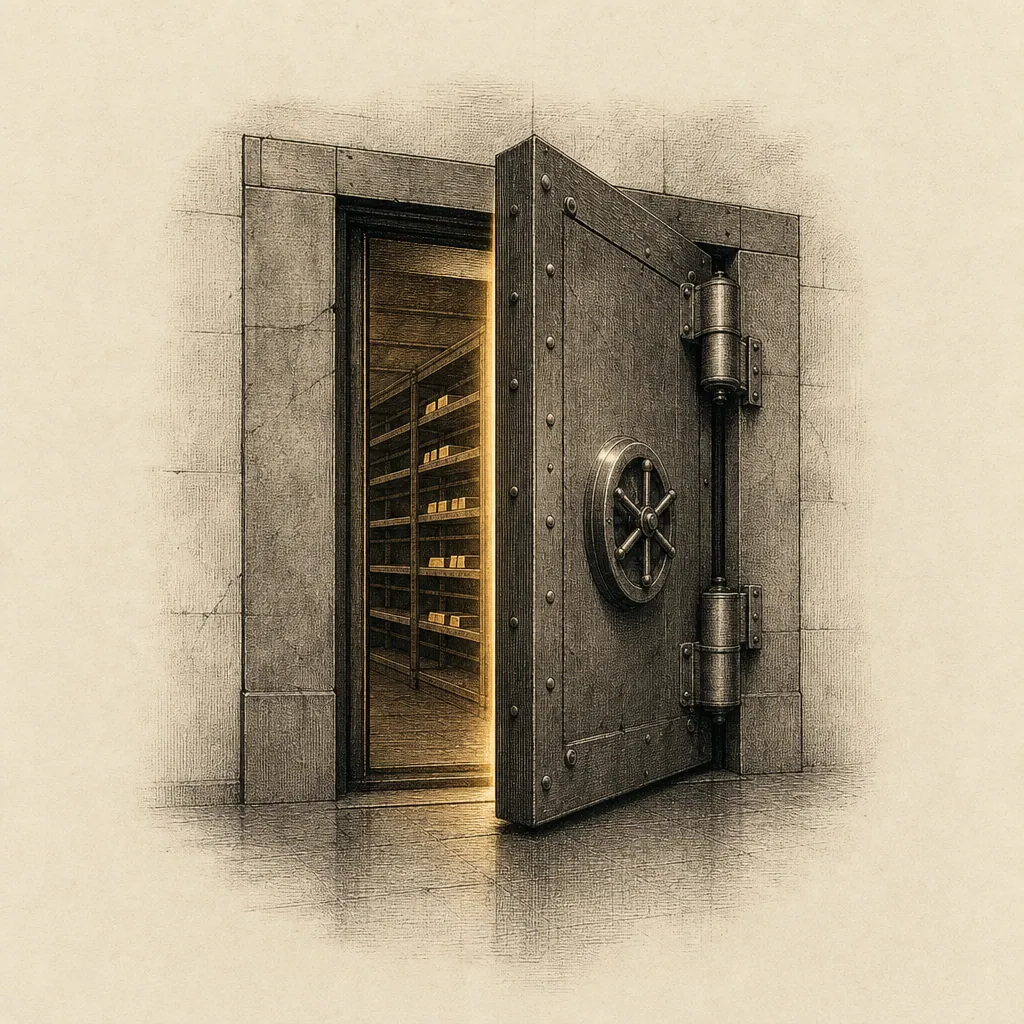
In 1944, at Bretton Woods, America promised the world it would exchange every dollar for gold at $35 an ounce. The monetary base was 100 per cent covered. Then came the soldiers. Vietnam cost, in today's money, around a trillion dollars a year; the monetary base grew fourfold, from $165 billion in 1948 to $670 billion in 1968 – the gold in Fort Knox did not. By 1971 the coverage had fallen to 20 per cent, and the world's governments could do the arithmetic: if four times as many dollars are claims on the same quantity of gold, each dollar is worth only a quarter of what was promised in 1944. So they brought dollars and took gold, at a price they recognised as a discount. France sent warships. The vaults emptied until Nixon closed the window on 15 August.
Within a decade gold rose by almost 2,000 per cent.
One has to hold on to the sequence, because it is due again today: first a paper promise that holds the price down for years. Then soldiers whose cost hollows out the promise. Then creditors who do the arithmetic and demand physical delivery. Then the break – and after it, the true price. 1933 was the same pattern on a smaller scale: Roosevelt broke the gold peg and repriced the metal overnight from $20 to $35. Both times the break was preceded by the same metric. In a hundred years of data, the value of all gold relative to the money supply had crossed the 120 per cent mark only twice – in the 1930s and in the 1970s. Today it stands at a record 171 per cent. The market is already where it stood, in both previous cases, shortly before the reset.
Why the system breaks
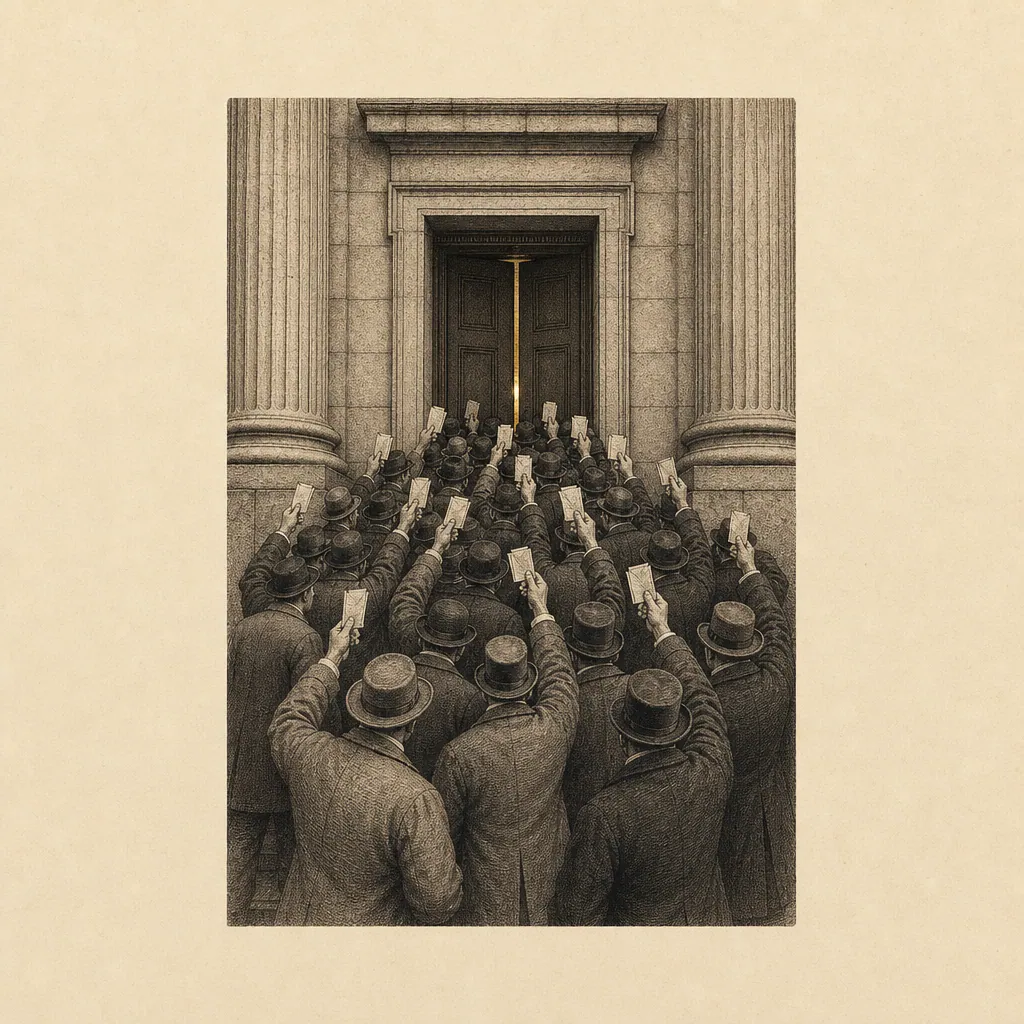
A paper gold system works like a bank: it is solvent as long as not everyone wants their metal at the same time. For fifty years the West has built on nobody asking. China's policy is that everybody asks – first its own citizens, then its own banks, then every trading partner that settles oil, copper or grain in yuan and can swap the proceeds into gold in Shanghai.
The mechanics are those of a bank run. Physical demand meets a system that was never built for it. The vaults in London and New York have already seen the largest outflows in their history in recent years, always eastward. Once a sufficiently large share of the claims demands physical delivery, the price of the metal decouples from the price of the contract. The contract falls because nobody wants it any more. The metal rises because nobody will part with it. That is the moment Xu Luode meant by the true price: not a different price for the same good, but the end of the fiction that paper and metal were the same good.
The other side of the coin: debt in soldiers

This break is the paper half of a test whose physical half is running on two fronts right now.
The comfortable textbook truth is that America cannot go bankrupt because it is indebted in its own currency. That holds only if you read the wrong balance sheet. The real indebtedness of the United States is not denominated in dollars. It is denominated in soldiers, ships, bases – in roughly 750 military installations in more than eighty countries, in carrier groups in the Gulf, in the Pacific, in the Mediterranean. That is the security against which the world holds Treasuries. Japan, Korea, Taiwan, the Gulf monarchies do not buy American bonds for the yield. They are paying protection money. Treasuries are the receipt for American soldiers standing on their soil. The petrodollar agreement of 1974 made the exchange explicit: oil in dollars, dollars into Treasuries, and in return the Fifth Fleet off the coast – protection money with a coupon.
A debt in soldiers has one property that a debt in dollars does not: you cannot inflate it away. A state that owes its creditors dollars can print until the debt disappears in real terms. A state that owes its creditors protection has to deliver afresh every year – with people, fuel, ammunition, ships, whose price rises with inflation instead of falling. Inflation does not devalue the obligation, it makes it more expensive. Every printed dollar meant to expropriate the bondholder makes more expensive the guarantee for which the bond is held. That is the trap: the way out that every indebted empire before America has taken is barred to an empire that is indebted in guarantees.
And that is exactly the guarantee now being called in. Russia is testing it in Odesa, Iran is testing it in Hormuz. Both times the answer is late, partial, qualified. A protection racket does not die with a no – it dies with a hesitation that every payer registers. Whoever pays for protection and gets none does not pay for long.
Here the two sides of the coin mesh. As long as gold is priced as paper, the alternative to a Treasury is a contract whose value depends on the same system. Once gold is priced physically, the creditor has, for the first time since 1971, a way out that does not run through Washington. The gold repricing is the condition under which protection money no longer has to be paid. And to the extent that creditors swap Treasuries for metal, the dollar loses the one buyer who never bought it for the yield.
This is why yields are rising even though the economy is not overheating and central banks are not running a cycle: the protection money is being renegotiated. 5.27 per cent on the thirty-year Treasury, 4.79 on the ten-year, Japan's long end above four, the Bund at its highest since 2011 – that is not an inflation expectation, that is a repricing of the guarantee. The buyers who held for protection are buying less. The buyers who buy for yield are demanding more. And a Treasury department that had to intervene at the long end in August, only to watch the intervention fizzle out within weeks, is showing the world that it no longer sets the price of its own debt.
The circle closes: rising yields make the debt in dollars more expensive. Inflation makes the debt in soldiers more expensive. Both at once are the pincer from which no monetary escape leads – and gold is the asset that wins inside the pincer, because it owes nobody anything and nobody can print it.
If the physical guarantee crumbles, the paper fiction becomes untenable. And if the paper fiction breaks, the physical guarantee has nothing left to be paid with. China does not have to attack the dollar. It only has to make sure the question about the metal is asked – by enough people, at the same time.
What this means
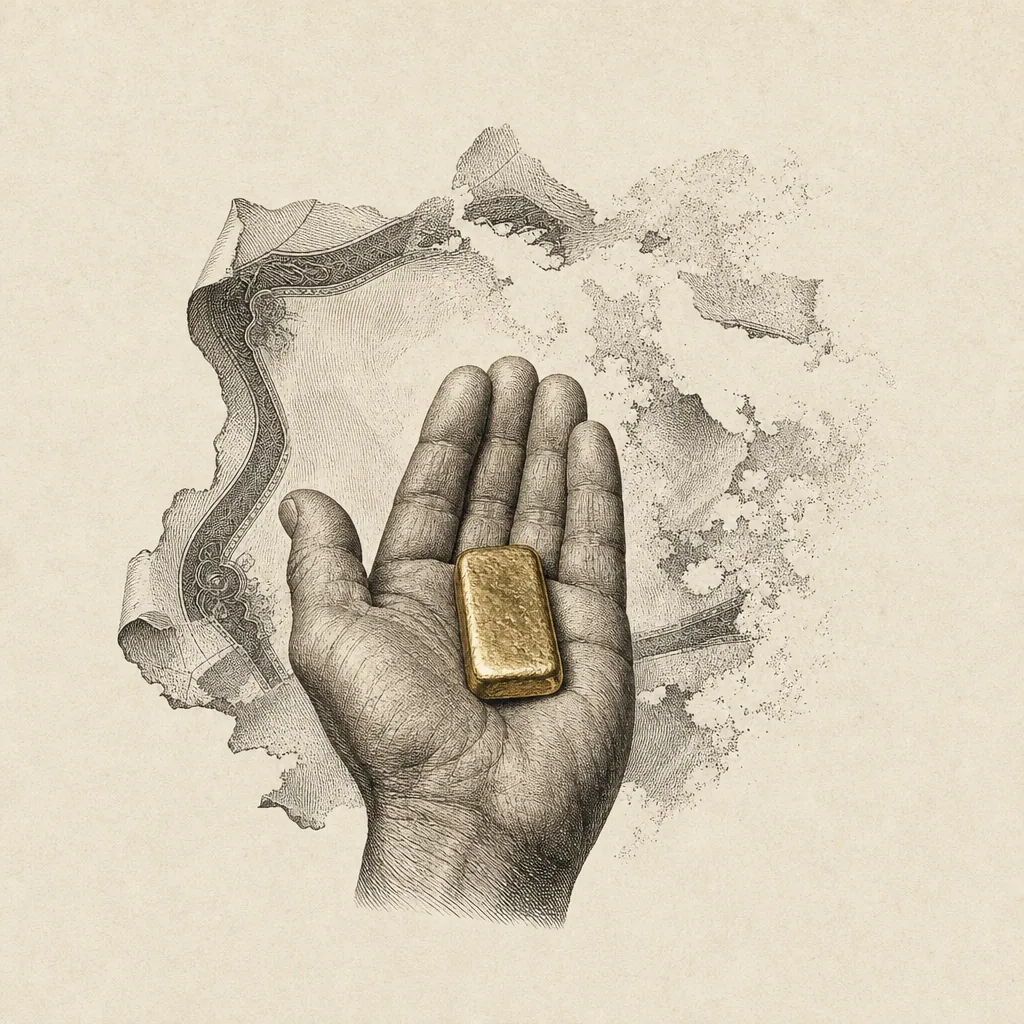
The golden age that begins here is not a price rise. It is a regime change: from a gold priced by contracts to a gold priced by possession. In that regime, paper claims on gold are not gold. ETFs, futures contracts, unallocated bank accounts, options on gold derivatives – all of it is a promise from a counterparty whose solvency is tested at precisely the moment you want to redeem the promise.
And there is a winner that is not a metal. If the gold price is set in Shanghai and settled in yuan, against metal that sits in Hong Kong, then the yuan has what it has lacked until now: an anchor the world trusts, even when it does not trust Beijing. That is the construction of 1944 with the roles swapped – and it bought America eighty years of primacy, even though the promise was broken in the end. China does not have to defeat the dollar to get there. It is enough that the dollar devalues itself while the yuan is tied to something that cannot be printed. A reserve-currency change typically takes a decade. The points for it are not set over a decade, but in weeks like these.
What counts in this regime is metal without a counterparty. And the companies that pull it out of the ground – as long as they sit in jurisdictions that let them.
Twelve years after Xu Luode's sentence, the world is listening. It just has not yet understood that the true price is not quoted in dollars. It is quoted in ounces, and in who holds them.
This page does not constitute investment advice, an investment recommendation, an offer, or a solicitation to buy or sell any financial instrument. Trading financial instruments involves substantial risk, up to and including total loss of capital; individual results may differ materially. Vaapad Capital is not a licensed investment firm and does not provide portfolio management. Past performance is not a reliable indicator of future results. Vaapad Capital holds positions in precious-metals and mining companies; the current positions are visible in the Live Book inside the member terminal. Full disclaimer.